
Building Emotional Acuity, in people, teams, and organisations
Youniq Minds and Dignity Inc bring the tools, methodology, and insight to build emotional competence so people can show up better, live fuller, and grow continuously.

Two organisations. One shared belief about emotions
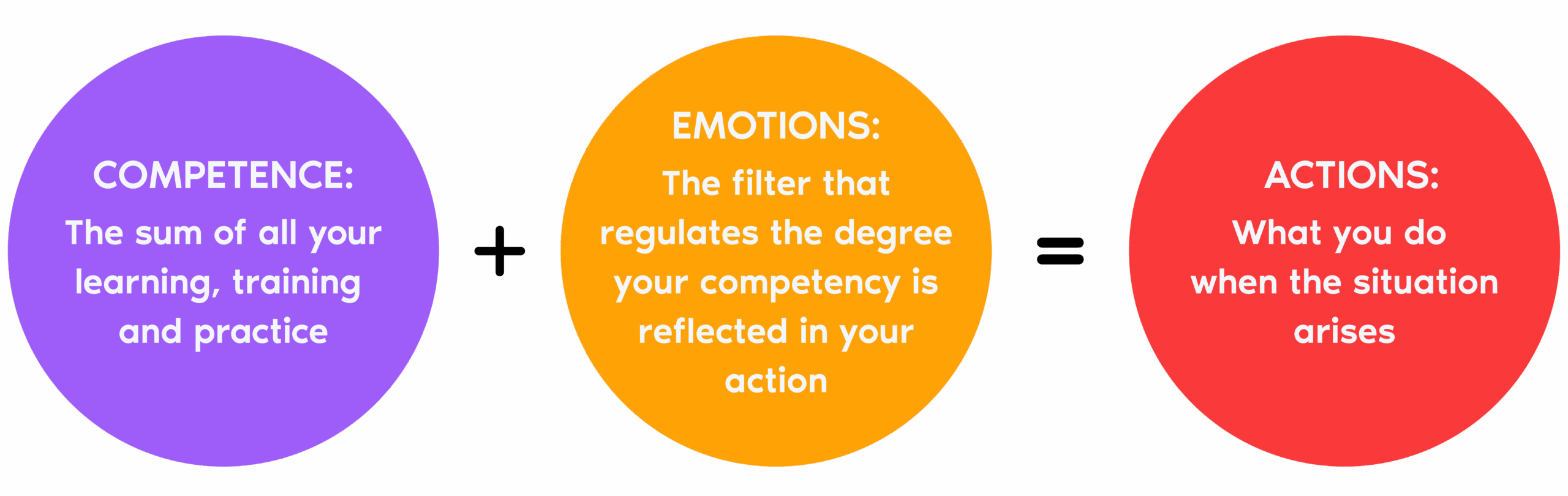
You can have all the competence in the world. Your emotions determine what actually happens.
This is why developing Emotional Acuity – in yourself, your team, and your organisation – is not optional. It is foundational.


Dignity Inc is founded by Dan Newby and Marcel Brunel.
Dignity Inc seeks to normalise emotions and embed them as a core element of personal and organisational development. Their beliefe: emotions are logicial, relevant, practical – and a gift every human is born with.
Our Partnership
Our work focuses on leadership and organizational effectiveness and Dignity Incs work and philosophy deeply resonates with us which is – “At the heart of leadership and human effectiveness lies a simple but often overlooked truth: Emotions shape how people think, decide, and act.” Emotions play an undeniable role in shaping our lives, families, and careers. There is an ironclad connection between your emotions and the way you show up for yourself and others.
Through Youniq Minds’ strategic collaboration with Dingity Inc, these globally established frameworks are now being brought to India in a culturally relevant and context-sensitive way. Together, Dignity Inc and Youniq Minds offer tailored interventions focused on Emotional Competence.
A central insight from this work is that emotional growth is not about becoming less human, but about taking greater responsibility for how we behave. Emotional regulation creates choice, and dignity guides action.
Championing Emotional Acuity in India
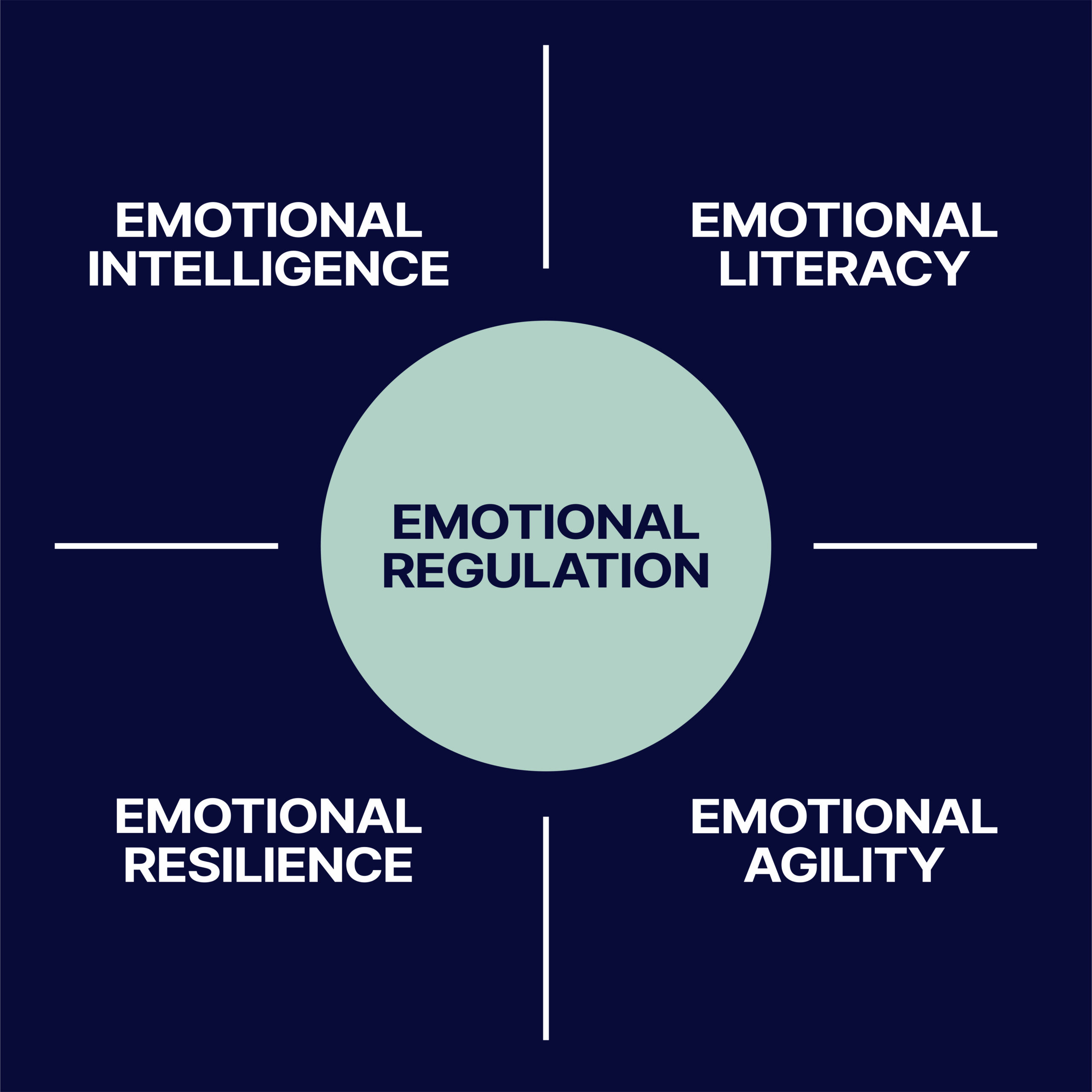
Emotional Acuity, as we define it, rests on five essential pillars — Emotional Intelligence, Emotional Literacy, Emotional Agility, Emotional Resilience, and Emotional Regulation.
At Youniq Minds, our work equips individuals and organizations to build awareness and approaches that strengthen emotional regulation, integrate dignity into every aspect of professional and personal life, and develop the inner skills to move beyond impostor syndrome.
Our work demonstrates that emotions are the bridge between competence and action and dignity guides how we cross it.
These programs address some of the most pressing leadership and workplace challenges today, helping organisations build emotionally aware, resilient, and dignified cultures. Each intervention can be offered as a stand‑alone working session or integrated into broader leadership and capability-building journeys.
These journeys address some of today’s most pressing workplace challenges: unmanaged stress, decisions made from reaction rather than intention, accountability that exists on paper but not in practice, conversations consistently avoided, and people and teams falling short of what they are truly capable of. At the heart of each challenge is an Emotional Acuity gap, and it can be learned, developed, and improved.

Emotional Regulation Dashboard Assessment
Explore your emotional regulation blueprint
Emotional Regulation Program
Discover your emotional regulation power
Dignity in Leadership Program
Recognize emotions in your decisions
Moving Beyond Imposter Syndrome
For high achievers with hidden self-doubt
Emotional Regulation Dashboard Assessment
The ERDA is the only psychometric assessment in the world that links your capacity for emotional regulation to your personality preferences. In a single report, you get a snapshot of your emotional regulation through the lenses of emotional intelligence, literacy, resilience, and agility. The ERDA spotlights the interdependence between your emotions and personality. In addition, it reveals the inverse correlation between your distress and well-being.
Through extensive validation and analysis, we’ve learned that:
- The predominant contributor to your Emotional Regulation is Emotional Agility, not Emotional Intelligence.
- Emotional Resilience counteracts distress to a greater degree than Emotional Intelligence or Literacy.
- The emotion that most affects your well-being is optimism.
You are embarking on a journey to explore the science inside of you in a way that has never before been possible. Enjoy your discoveries!
This means every learning journey is anchored in data, not assumptions, so leaders can see where they are today, their development opportunities, measure progress over time, and target development where it will shift both distress and well‑being the most.
Emotional Regulation
At its core, emotional regulation is not about control – it’s about choice. It teaches us how to dial up or dial back emotions with awareness and intention, enabling us to lead with clarity, confidence, and connection. It is the ability to notice, name, and navigate emotions based on what the situation needs. It allows us to move from emotional reaction to emotional wisdom.
What We Explore:
- The nature and purpose of emotions
- Who we are and who we would like to be emotionally
- The gap between emotional awareness and practical application
- Emotional Intelligence, Emotional Agility, Emotional Literacy, and Emotional Regulation as a unified system
Why It Matters:
We’ve spent years training leaders in strategy, operations, and execution. But all of that runs through one powerful filter: Emotions.
Dignity in Leadership
Intellectual competency gets a leader into the room. Emotional resources determine what they build once they are there. Dignity in Leadership helps leaders recognise that the most high-performing environments are the most emotionally aware ones. When leaders feel seen, trusted, and respected, and extend the same to others, people bring their full capabilities forward not because they have to, but because they genuinely want to.
This helps leaders understand how emotions shape authority, decision-making, and influence.
What We Explore
- The interdependence of emotions, behaviour, and leadership outcomes
- How distress undermines well-being and leads to burnout
- Emotional regulation as an essential professional competency
- How the emotion of dignity elevates lives, strengthens families, and makes careers
- Why developing emotional competence takes regularity and commitment
Why It Matters
Leadership is emotional work and most leaders are navigating it without the tools to do so intentionally.
Moving Beyond Imposter Syndrome
Imposter Syndrome does not always look like insecurity. It quietly shapes leadership behaviour as a deeper question of self-worth, influencing how leaders make decisions, communicate, build trust, and show up for others. This journey is not about fixing confidence. It is about building self-worth grounded in dignity and self-awareness, so leaders can move from self-doubt to self-trust, from control to clarity, and from reaction to regulation.
What We Explore
- How internal narratives shape decisions, communication, and the ability to lead others
- Real workplace patterns — avoidance, over-validation, micromanagement, indirect communication
- The relationship between self-worth, dignity, and leadership identity
- Emotional literacy tools including the Emotional Regulation Dashboard Assessment
Why It Matters
When leaders do not fully trust themselves, they cannot build teams that trust them. The cost shows up as compliance instead of commitment, silence instead of ownership, and control instead of trust.
EMORE
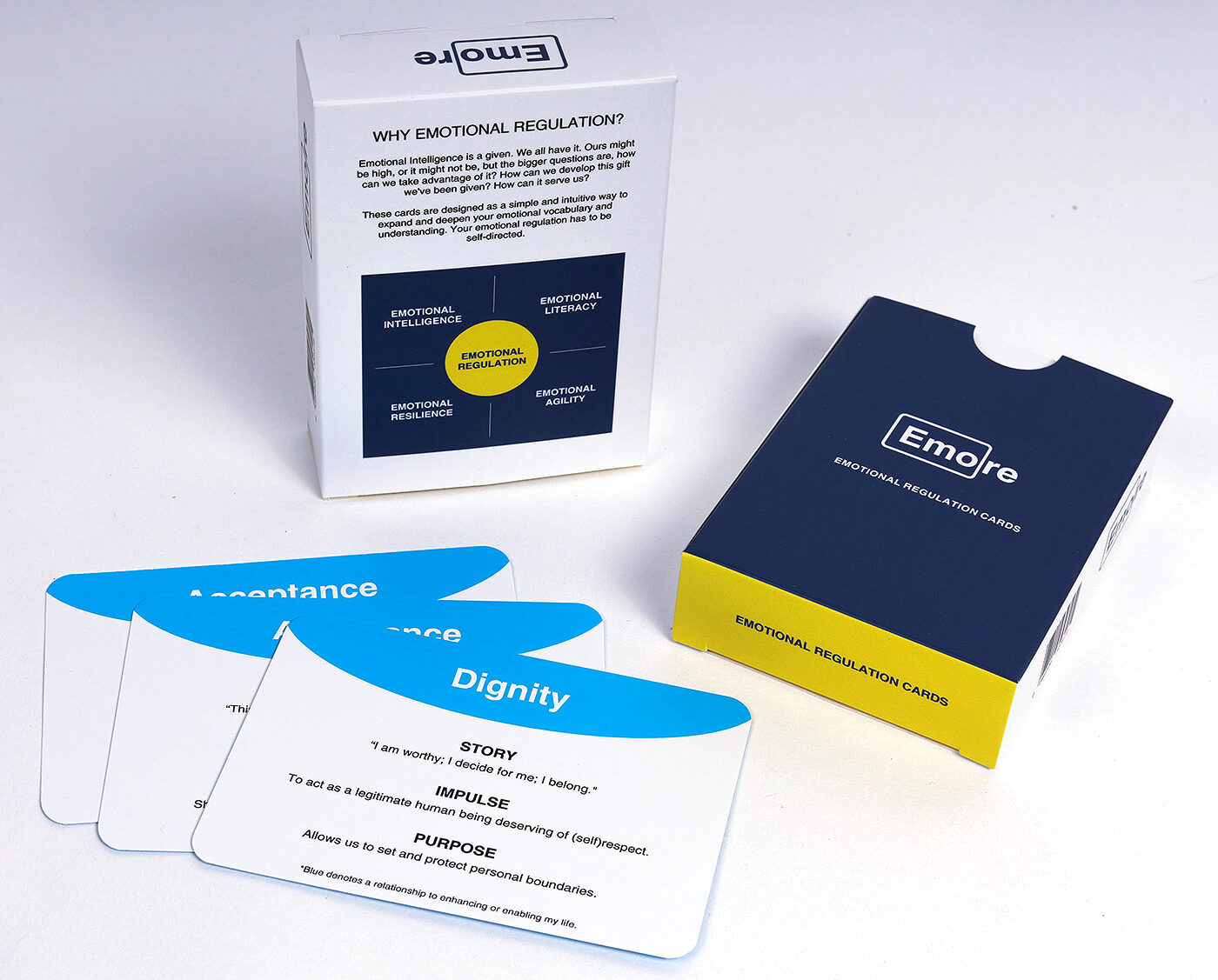
EMORE is short for Emotional Regulation. These cards were developed as a learning tool to help learners recognize that there is a far wider range of emotions than most of us are aware of or can name. Each emotion carries its own story, impulse, and purpose. Emotions do not appear at random; they carry meaningful information that shapes how we think, act, and relate to others. You can ignore your emotions but they won’t ignore you.
Literacy for Emotional Acuity and Dignity - LEAD
LEAD is a twelve-month roadmap. It helps organisations integrate emotions as a daily tool and asset in how people work, lead, and relate to one another. Over the course of the year,
- Teams build a shared emotional language
- Develop practical regulation skills
- Deepen their capacity for better decision-making, problem-solving, and relationship-building.
Crucially, LEAD also builds internal champions, leaders within your organisation who can continue to coach, train, and mentor others long after the journey ends.
Why It Matters
Emotional competence is not built in a day; it takes regularity, commitment, and application. LEAD is designed for organisations ready to make that commitment and build it into how they operate every day.
What We Explore
- Universal principles of emotional regulation are learnable, teachable, and applicable across cultures, industries, and generations
- The myths and misapprehensions about emotions that quietly undermine performance
- Self-regulation, emotional literacy, and how to build a shared language for emotions across teams
- How to consciously shape your organisation’s culture by leveraging emotions
Building internal champions
A defining feature of LEAD is its focus on sustainability. We work with your organisation to identify and develop internal champions; people who can coach, train, and mentor others from within, ensuring the learning becomes part of how your organisation operates permanently.